Buenos Aires grew along the shores of the Río de la Plata and was profoundly transformed by the arrival of millions of European immigrants during the late nineteenth and early twentieth centuries. Their influence can still be seen in the city’s eclectic architecture, traditional cafés, colorful neighborhoods and lively street life.
Among the best things to do in Buenos Aires are exploring its historic neighborhoods, browsing outdoor markets, learning about Eva Perón and discovering the many layers of Argentina’s political and cultural history.
From the antiques of San Telmo to the artisan stalls of Recoleta, these are seven places that deserve a spot on any Buenos Aires tour itinerary.
1. Explore San Telmo and Its Famous Sunday Market
San Telmo is one of the oldest neighborhoods in the city and an essential stop for anyone interested in history, architecture and local culture. Its name comes from the Church of San Pedro González Telmo, built in what was once the southern edge of colonial Buenos Aires.
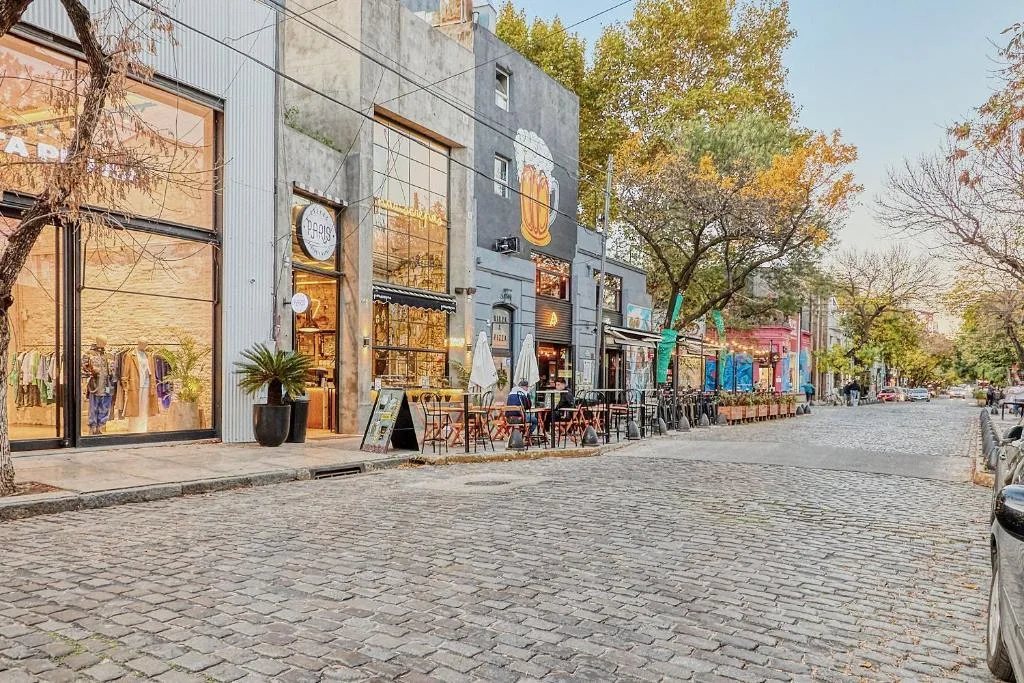
The neighborhood’s cobblestone streets, nineteenth-century houses and traditional cafés make it one of the most atmospheric places to explore on foot.
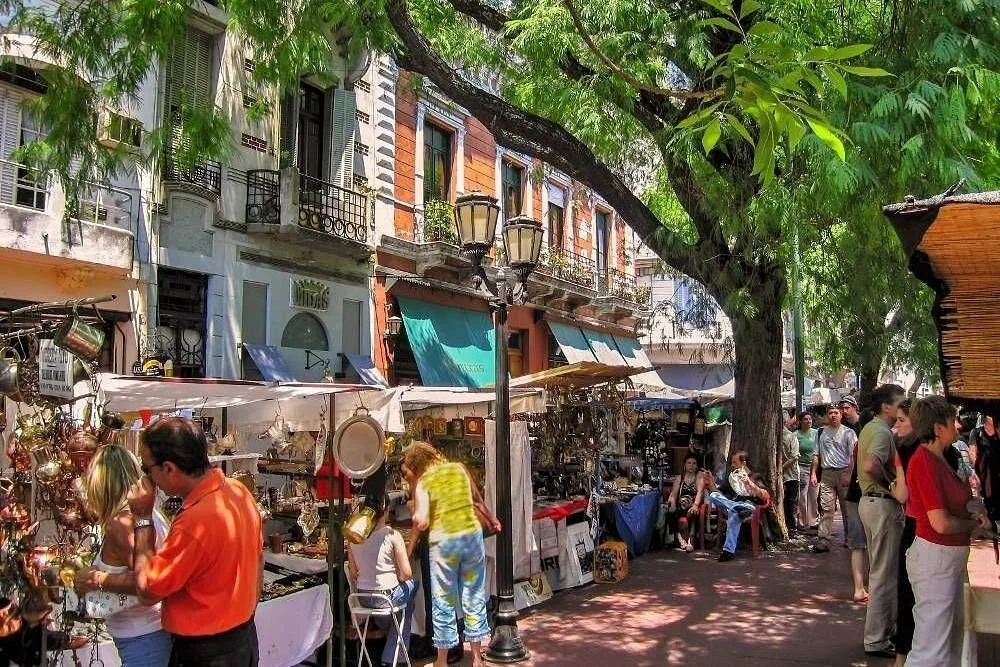
Every Sunday, Calle Defensa and Plaza Dorrego become the setting for the famous Sunday market of Buenos Aires, officially known as the Feria de San Telmo. Hundreds of stalls sell antiques, vintage signs, books, vinyl records, jewelry, artwork, clothing and handmade souvenirs. Street musicians and tango performers add to the lively atmosphere.
The fair extends along Calle Defensa through the historic district, with much of its activity centered around Plaza Dorrego. It is one of the largest and best-known open-air fairs among the many markets of Buenos Aires.
San Telmo Market or San Telmo Fair?
Visitors often confuse two different attractions:
- Feria de San Telmo: The outdoor antiques and crafts fair held on Sundays along Calle Defensa and around Plaza Dorrego.
- Mercado de San Telmo: A historic indoor market located at the corner of Defensa and Carlos Calvo.
The indoor market opened in 1897 to serve the growing immigrant population. Designed by Italian-born architect Juan Antonio Buschiazzo, it retains its original iron columns, metal framework and large central dome.
Today, it combines antiques and traditional produce stalls with coffee shops, restaurants and international food vendors.
If you are looking for a Saturday market in Buenos Aires, the indoor Mercado de San Telmo is an excellent option. Saturday is generally less crowded than Sunday, although the famous outdoor fair only takes place on Sundays.
2. Visit Recoleta Cemetery and Evita’s Tomb
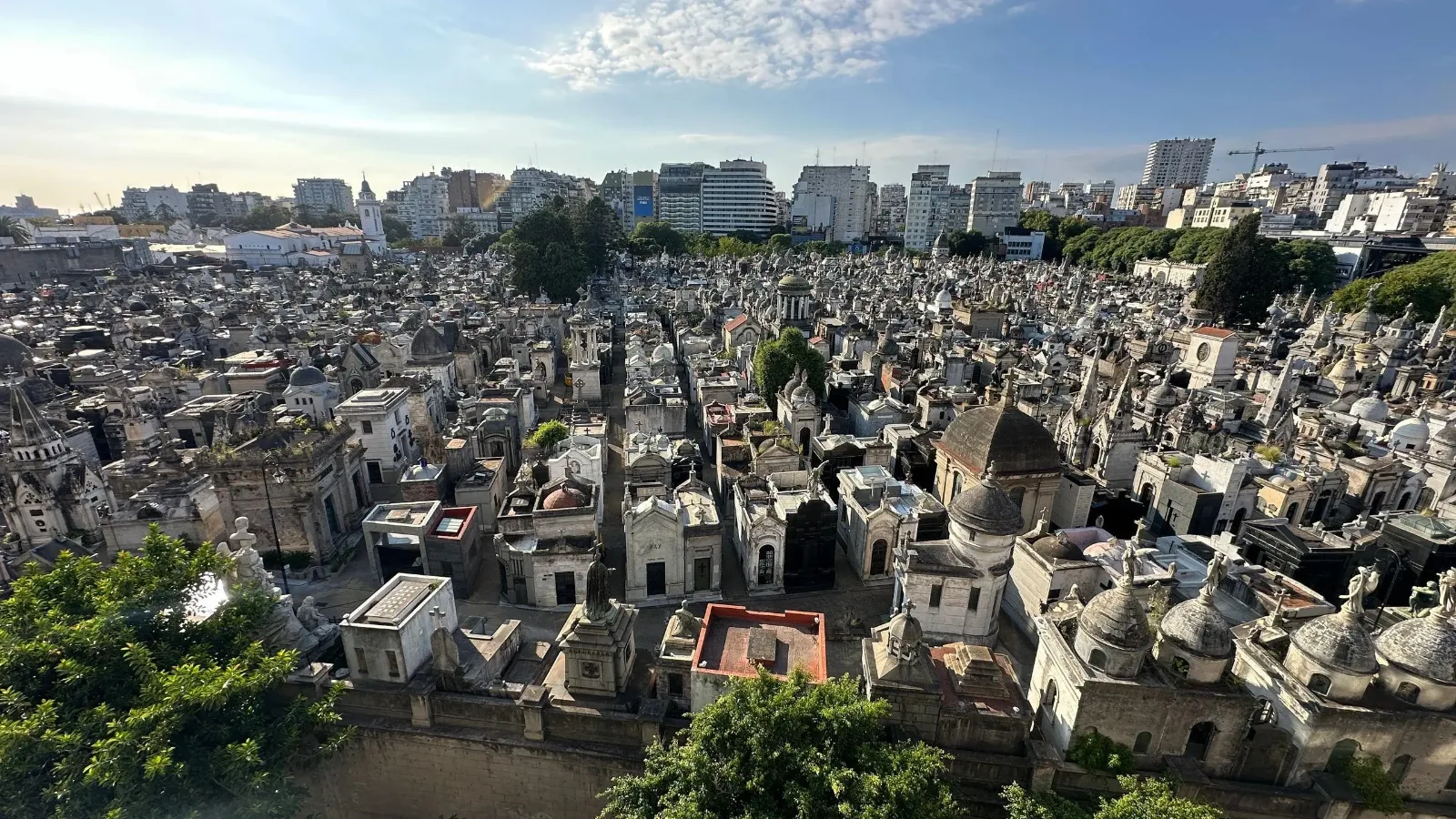
Recoleta Cemetery is much more than a burial ground. Its narrow walkways, marble mausoleums and elaborate sculptures make it feel like a small city within the city.
Opened in 1822, it was Buenos Aires’ first public cemetery. Many of its mausoleums were built for the country’s most prominent political and aristocratic families and display an extraordinary combination of Neoclassical, Neo-Gothic, Art Nouveau and Art Deco styles. More than 90 tombs have been declared National Historical Monuments.
The cemetery is sometimes compared to Père-Lachaise in Paris, but its history and architectural character are uniquely Argentine. Former presidents, military leaders, writers, scientists and members of the country’s traditional elite are buried here.
Its most visited tomb belongs to Eva Perón, better known as Evita. Born Eva Duarte, she became one of the most influential and controversial figures in Argentine history after marrying President Juan Domingo Perón.
Evita championed labor rights, women’s political participation and assistance for the poor. She remains a powerful symbol in Argentina, where her legacy continues to inspire both devotion and debate.
Her flower-covered tomb can be found inside the Duarte family mausoleum. A guided visit is highly recommended because many of the cemetery’s most fascinating stories are difficult to discover without historical context.
3. Browse the Recoleta Artisan Market
Just outside Recoleta Cemetery, visitors will find one of the most popular artisan markets in Buenos Aires.
Commonly called the Plaza Francia Market, the fair is actually held in Plaza Intendente Torcuato de Alvear. It takes place on Saturdays, Sundays and public holidays and features original pieces made by the artisans themselves.
The stalls offer products made from:
- Leather
- Ceramics
- Wood
- Metal
- Silver
- Textiles
- Wool
- Glass
This is one of the best places to purchase locally made gifts rather than mass-produced souvenirs. The surrounding green space often attracts musicians, performers and local residents enjoying the weekend.
The fair’s location also makes it easy to combine with Recoleta Cemetery, the Basilica of Our Lady of the Pillar, the Recoleta Cultural Center and a coffee at La Biela, one of the city’s classic historic cafés.
In addition to the weekend artisan fair, visitors can explore a smaller outdoor art market near Recoleta Cemetery. Local painters exhibit and sell works inspired by tango, Buenos Aires architecture and other recognizable scenes from the city.
4. Discover the Colorful Houses and Outdoor Market of La Boca
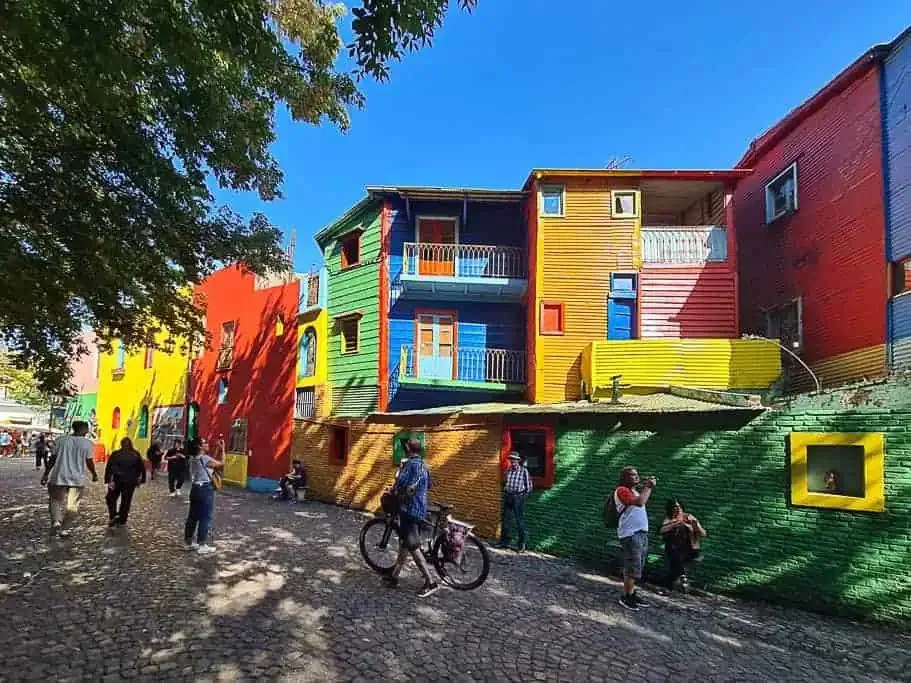
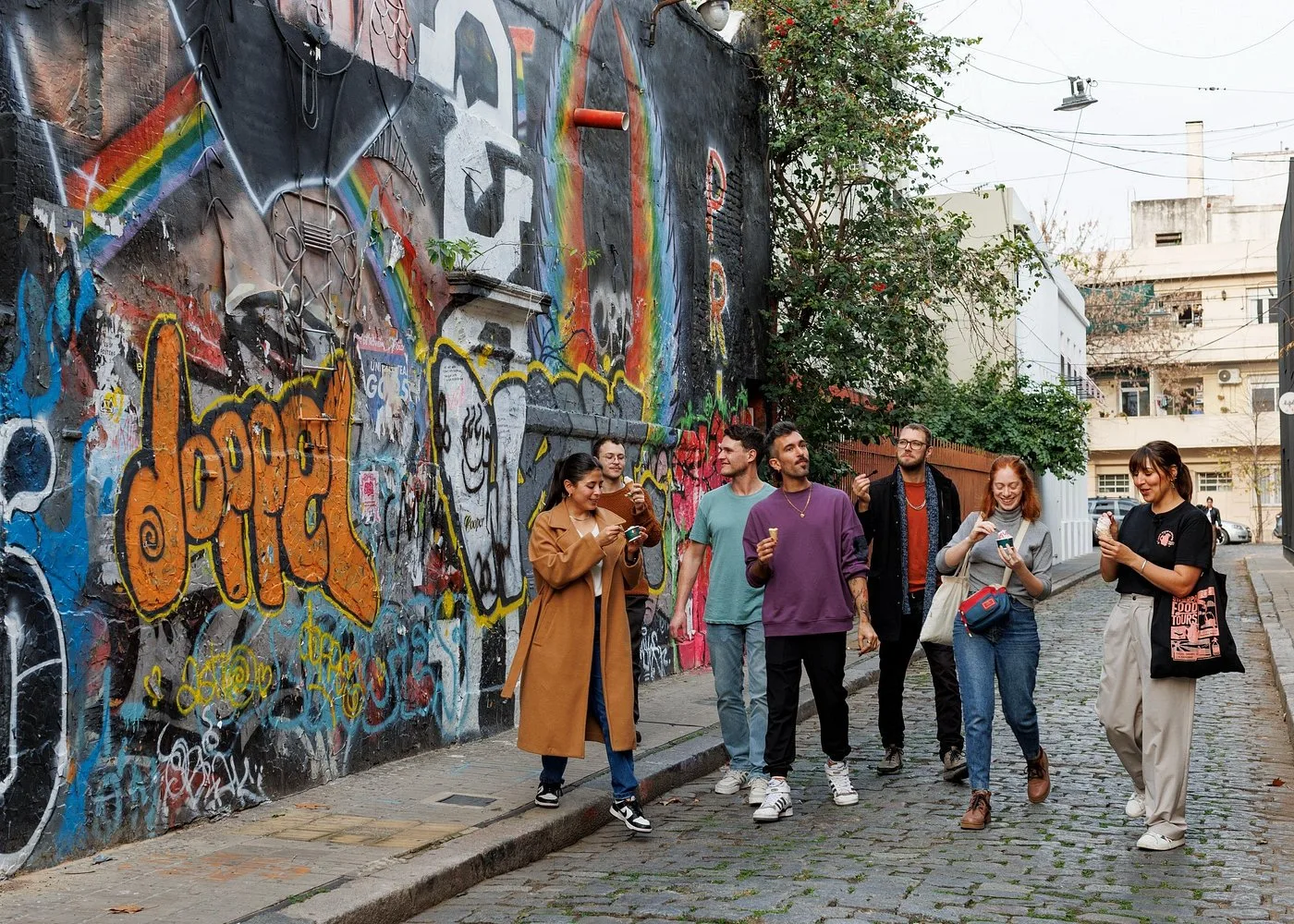
With its colorful houses, corrugated-metal façades and strong immigrant identity, La Boca has more visual character than almost any other neighborhood in Buenos Aires.
The district developed close to the old port and became home to many Genoese immigrants during the late nineteenth and early twentieth centuries. Many families lived in shared tenement houses known as conventillos, built from wood and sheet metal and frequently painted with leftover marine paint.
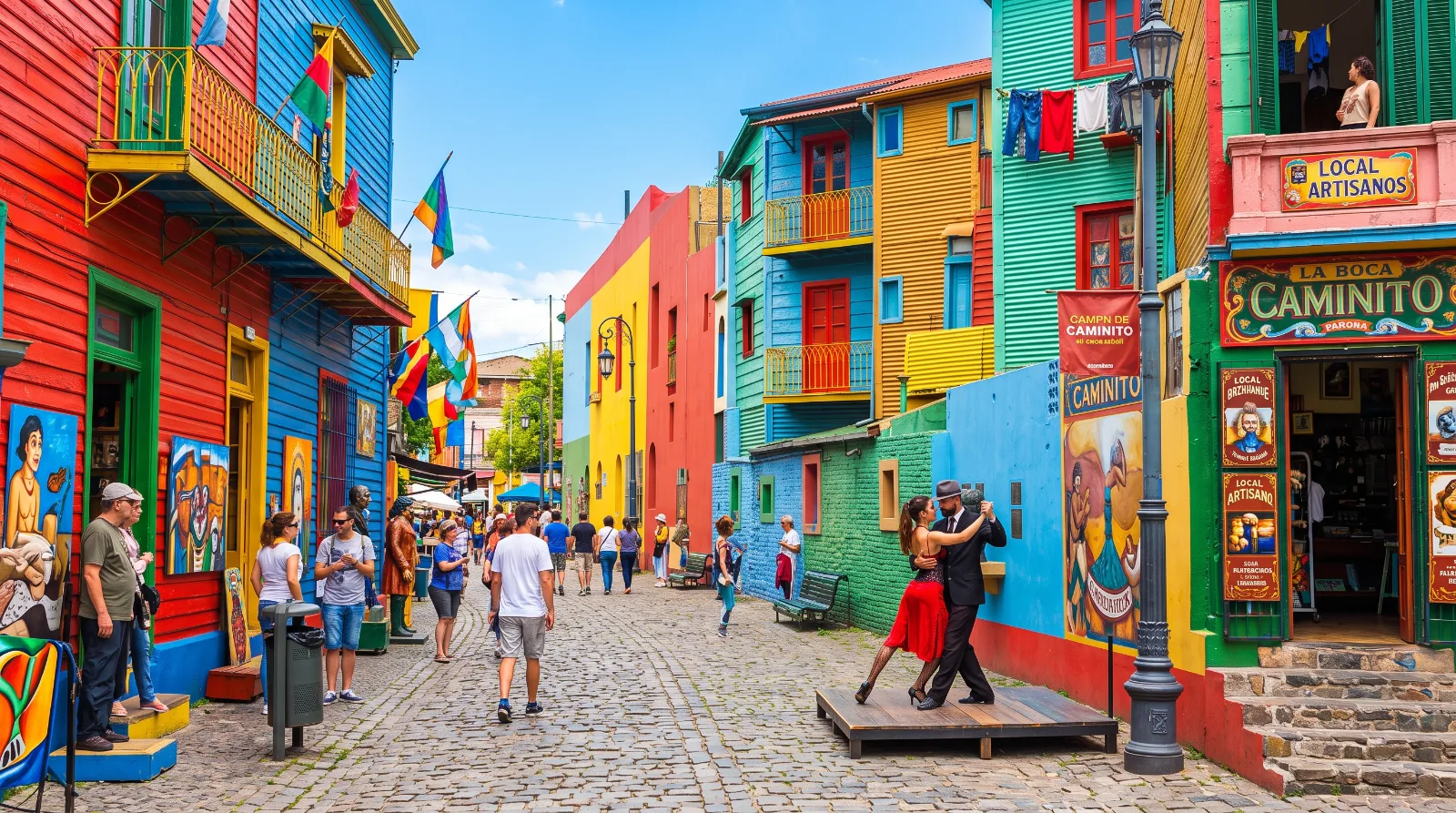
At the center of the neighborhood is Caminito, a pedestrian street, open-air museum and popular outdoor market. During the 1950s, local artist Benito Quinquela Martín helped transform this abandoned former railway route into a public cultural space filled with sculptures, murals and brightly painted buildings.
Its name pays tribute to “Caminito,” the famous 1926 tango composed by Juan de Dios Filiberto and Gabino Coria Peñaloza.
Today, Caminito is one of the most colorful places in Buenos Aires. Its outdoor market brings together local artists, painters, craftspeople, tango dancers and souvenir vendors.
Visitors can often watch artists at work, creating paintings inspired by La Boca, tango and everyday life in Buenos Aires. The market generally operates every day, making it a useful alternative when the city’s weekend markets are closed.
La Boca is also home to La Bombonera, the legendary Boca Juniors football stadium, as well as the Benito Quinquela Martín Museum and Fundación Proa.
5. Stand in Plaza de Mayo, the Political Heart of Argentina
For travelers interested in Argentine history, Plaza de Mayo is one of the most important things to do in Buenos Aires, Argentina.
The square has witnessed many of the country’s defining political moments, from the May Revolution of 1810 to demonstrations, celebrations and protests during the twentieth and twenty-first centuries.
At its eastern end stands the Casa Rosada, Argentina’s presidential palace. Eva Perón addressed enormous crowds from one of its balconies during the late 1940s and early 1950s, becoming inseparably associated with the building.
However, Evita did not sing “Don’t Cry for Me Argentina” from the balcony. The song was written for the 1976 musical Evita by Andrew Lloyd Webber and Tim Rice. Madonna performed it on the Casa Rosada balcony while filming the 1996 movie adaptation.
Plaza de Mayo is also associated with the Mothers of Plaza de Mayo. Beginning in 1977, during Argentina’s last military dictatorship, the mothers began walking in a circle around the May Pyramid to demand information about their children, who had been abducted and forcibly disappeared.
Unable to hold a public gathering, they kept moving in a circle around the monument. Their weekly march became one of the most internationally recognized symbols of resistance to the dictatorship.
Their white headscarves are now represented on the pavement around the pyramid, making Plaza de Mayo one of Argentina’s most significant sites of memory.
6. Enter the Metropolitan Cathedral
Facing Plaza de Mayo, the Metropolitan Cathedral is the principal Catholic church in Argentina.
Its Neoclassical façade resembles a Greek temple, with twelve columns representing the twelve apostles. Inside, its architectural language changes dramatically, combining Neo-Romanesque and Neo-Baroque elements, Venetian mosaics and a richly decorated eighteenth-century altar.
The cathedral was also where Jorge Mario Bergoglio served as Archbishop of Buenos Aires before becoming Pope Francis in 2013.
Another important feature is the mausoleum of General José de San Martín, one of the principal leaders of South American independence. Sometimes described to international visitors as Argentina’s George Washington, San Martín played a decisive role in the liberation of Argentina, Chile and Peru.
His mausoleum is guarded by members of the Regiment of Mounted Grenadiers, the historic military unit he founded in 1812.
7. Walk Along Puerto Madero and Cross Puente de la Mujer
Puerto Madero represents the modern face of Buenos Aires. The neighborhood was developed around docks constructed during the late nineteenth century as part of a port project promoted by businessman Eduardo Madero.
The port soon became obsolete, and the area remained largely abandoned for decades. Beginning in the 1990s, its brick warehouses were restored and converted into restaurants, offices, apartments and cultural spaces.
Today, Puerto Madero is one of the city’s most popular waterfront districts.
Its best-known landmark is Puente de la Mujer, a rotating pedestrian bridge designed by Spanish architect Santiago Calatrava and inaugurated in 2001. Its asymmetrical design is often interpreted as a couple dancing tango.
The bridge’s name also reflects an important characteristic of Puerto Madero: most of its streets are named after notable Argentine and Latin American women.
A short walk from the bridge, visitors can also find a statue of Anne Frank. The memorial adds another layer to an area that combines public art, architecture, historical ships and views over the old docks.
Which Buenos Aires Markets Should You Visit?
The best choice depends on the day of your visit:
DayRecommended marketBest forMonday–Friday Mercado de San TelmoFood, coffee and antiquesSaturday Recoleta Artisan MarketHandmade crafts and local giftsSaturday Mercado de San TelmoIndoor market experienceSunday Feria de San TelmoAntiques, crafts and street cultureSunday Recoleta Artisan MarketOriginal handmade productsAny day Caminito Outdoor Market Paintings, souvenirs and local artistsMarket schedules may change because of public holidays, special events or poor weather, so it is always advisable to confirm opening times before visiting.
Final Tips for Exploring Buenos Aires
The historic attractions and artisan markets of Buenos Aires reveal different aspects of the city’s identity. San Telmo reflects its colonial and immigrant past; La Boca preserves the memory of its old port community; Recoleta tells the story of Argentina’s political elite; and Plaza de Mayo remains the center of the country’s public life.
Visitors interested in Evita, Perón, immigration, architecture or local craftsmanship can connect these places in a single itinerary. However, understanding the stories behind them can make the experience much more meaningful.
Whether you explore independently or choose a private guided tour, these neighborhoods and markets belong among the most memorable things to do in Buenos Aires.