Few neighborhoods represent Buenos Aires as vividly as La Boca. Its brightly painted buildings, open-air tango performances and blue-and-yellow soccer murals appear on postcards, travel guides and social media around the world. But the neighborhood is much more than a colorful backdrop for photographs.
La Boca grew beside the old port of Buenos Aires and was shaped by immigration, working-class life, art, political activism and an extraordinary passion for soccer. Its streets tell the story of the people who arrived in Argentina looking for a new beginning, often living and working in difficult conditions while creating a powerful community identity.
Today, most visitors know La Boca because of Caminito and Boca Juniors. Both are essential parts of the neighborhood, but they make more sense when understood as pieces of a much larger story.
This guide explores what makes La Boca, Buenos Aires, unique, what to see beyond its most famous street and how to plan a rewarding visit.
Where Is La Boca?
La Boca is located in the southeastern part of Buenos Aires, close to the mouth of the Riachuelo river. Its name comes from this geographical position: la boca means “the mouth,” referring to the point where the river reaches the Río de la Plata.
The neighborhood developed around Buenos Aires’ early port activity. Ships, warehouses, workshops and shipyards once defined the area, attracting workers and newly arrived immigrants. Although the city’s principal port eventually moved farther north, La Boca retained the architecture, traditions and social identity created during those formative years.
La Boca borders San Telmo, Barracas and Puerto Madero, but it feels markedly different from all three. San Telmo is associated with colonial streets and antique markets, Puerto Madero with contemporary architecture, and Barracas with industrial heritage. La Boca is more theatrical, intense and closely connected to the immigrant and working-class history of the city.
The Immigrant Origins of La Boca
To understand La Boca, it is necessary to understand immigration to Argentina.
Between the late nineteenth and early twentieth centuries, Buenos Aires received hundreds of thousands of European immigrants. Many came from Italy, and a significant number originated in Genoa and the surrounding region of Liguria.
Some of these immigrants found work in La Boca’s port, warehouses and shipyards. They formed mutual-aid societies, newspapers, political organizations, theaters and neighborhood associations. Their influence can still be detected in local vocabulary, food, architecture and cultural traditions.
The Genoese connection became so strong that residents of La Boca are sometimes known as xeneizes, a word derived from the Genoese term for “Genoese.” The same nickname is used for Boca Juniors and its supporters.
La Boca’s history was not simply a story of picturesque immigration. Port workers often faced long hours, poor housing and unstable employment. The neighborhood became an important center of labor organization and political activity. Socialist, anarchist and union movements found a receptive audience among its workers.
This combination of immigration, labor and community life gave La Boca a proud and independent character that survives beneath its tourist attractions.
Conventillos and the Colorful Houses of La Boca
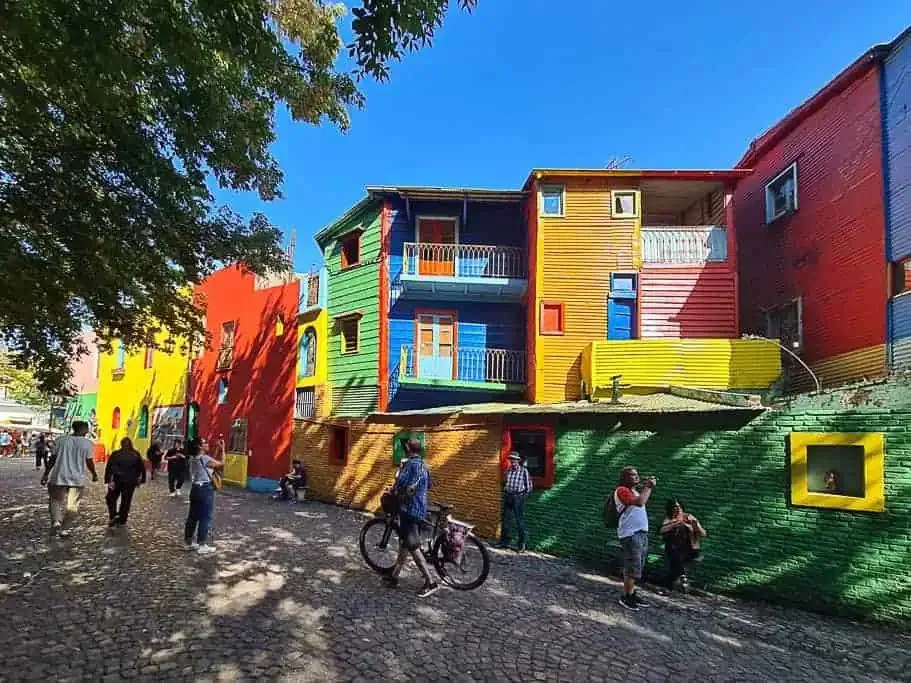
The colorful buildings associated with La Boca were originally connected to its working-class housing.
Many immigrant families lived in conventillos: shared tenement houses divided into small rooms and organized around a communal courtyard. Kitchens, washing areas and bathrooms were frequently shared among numerous residents.
Housing was often constructed from wood and corrugated metal, materials that were relatively inexpensive and readily available around the port. Because paint was expensive, residents reportedly used leftover marine paint obtained from nearby shipyards. There was not always enough paint to cover an entire façade in one color, producing combinations of different shades.
The modern appearance of Caminito is more deliberately artistic than the historical reality of the conventillos. Still, the painted metal façades refer to an authentic architectural and social history.
The conventillo was a place of hardship, overcrowding and limited privacy, but it was also a setting for cultural exchange. Spanish, Italian dialects and other languages mixed in courtyards where neighbors shared meals, music, arguments and celebrations.
These communal spaces contributed to the development of Buenos Aires’ popular culture, including forms of music and dance that would eventually become associated with tango.
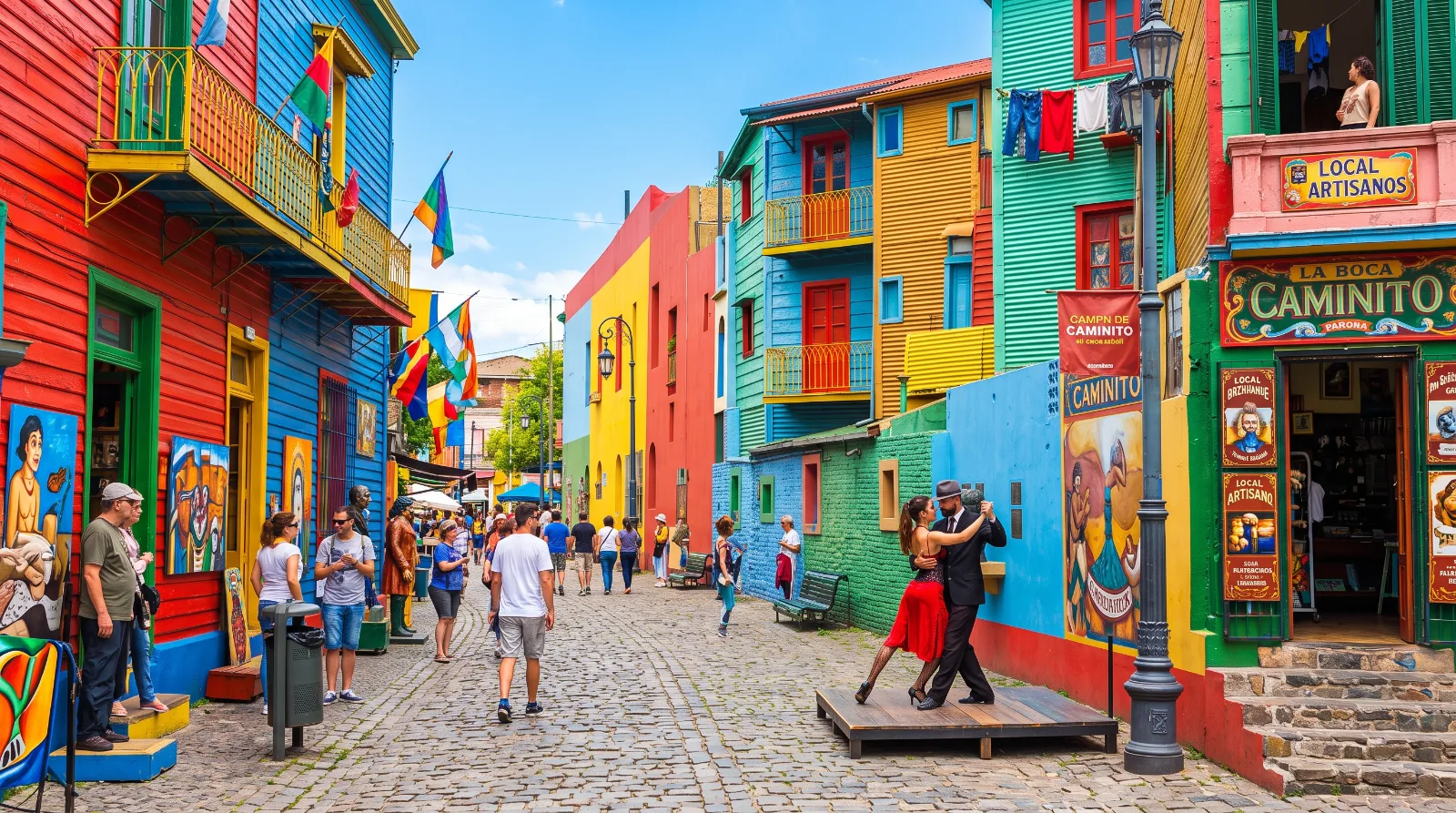
Caminito: The Famous Street Museum
Caminito is the best-known attraction in La Boca and one of the most photographed places in Buenos Aires.
The pedestrian passage follows an old route that was once connected to a stream and later used by a railway. After the railroad closed, the area was abandoned. During the 1950s, local residents worked to recover the space, with artist Benito Quinquela Martín playing a central role in its transformation.
Quinquela Martín encouraged the use of bright colors on the surrounding buildings and helped convert the passage into an open-air museum. Sculptures and artworks were incorporated into the street, creating the visual identity now associated with Caminito.
Today, Caminito is filled with artists’ stalls, souvenir shops, restaurants and performers. Couples dressed in traditional costumes pose for tango photographs, while balconies and façades provide some of the neighborhood’s most recognizable images.
Caminito is unquestionably tourist-oriented, but that does not make it inauthentic. It is better understood as a carefully constructed representation of La Boca’s history, shaped by residents and artists who wanted to preserve and celebrate the neighborhood.
The most interesting visit combines the visual spectacle with an understanding of what the colors, buildings and public artworks represent.
Benito Quinquela Martín and the Art of the Port
No individual influenced the visual identity of La Boca more than Benito Quinquela Martín.
Born in Buenos Aires in 1890 and abandoned as an infant, Quinquela Martín was adopted by a working-class family from La Boca. He worked in the neighborhood’s coal yards before becoming one of Argentina’s most recognizable painters.
His paintings frequently depict the port, ships and laborers. Rather than presenting port work as quiet or picturesque, his canvases are filled with movement, smoke, fire, physical effort and intense color.
Quinquela Martín believed that art should improve the community where it was created. He donated land and resources for a school, a theater, a medical center and other neighborhood institutions.
The Museo Benito Quinquela Martín houses the largest collection of his paintings and etchings, together with Argentine figurative art, ship figureheads and sculptures. The building also contains his former home and studio.
For visitors interested in the history and culture of La Boca, the museum provides essential context. It reveals that the neighborhood’s colors are not merely a tourism marketing device: they form part of a broader artistic project tied to community identity.
Boca Juniors Stadium and La Bombonera
It is almost impossible to separate La Boca from Boca Juniors.
Founded in 1905 by young men from the neighborhood, Club Atlético Boca Juniors became one of Argentina’s most successful and widely supported soccer clubs. Its blue-and-yellow colors dominate the streets around the stadium, appearing on houses, shops, murals and balconies.
The club’s nickname, Xeneize, references the Genoese immigrants who helped shape the neighborhood.
Boca Juniors’ stadium is officially named Estadio Alberto J. Armando, but almost everyone calls it La Bombonera—the chocolate box. Its unusual design was created to fit a large stadium into a restricted urban space.
The steep stands and close proximity to the field contribute to an intense atmosphere during matches. Local supporters sometimes say that La Bombonera does not tremble: it beats.
Even outside match days, the streets surrounding the stadium demonstrate how deeply the club is connected to the neighborhood. Murals portray famous players, historic victories and Diego Maradona, whose relationship with Boca occupies a special place in Argentine soccer culture.
The Museo de la Pasión Boquense presents the club’s history through trophies, audiovisual displays and memorabilia. Current opening information and tickets should always be confirmed on the official Boca Juniors website, particularly because access can change on match days.
Travelers should not describe a general exterior visit as a “Boca Juniors stadium tour.” That phrase suggests admission to the museum or stadium facilities, while many La Boca tours see La Bombonera only from the surrounding streets.
Tango and Popular Culture
Tango is strongly associated with La Boca, although the music did not originate in a single neighborhood.
During the late nineteenth century, the port districts of Buenos Aires became meeting places for immigrants, sailors, Afro-Argentine traditions and rural migrants arriving from the interior. Music, rhythms and languages interacted in dance halls, courtyards and working-class social spaces.
La Boca was one of several neighborhoods where this cultural exchange helped shape early tango.
Caminito itself shares its name with a famous tango composed by Juan de Dios Filiberto, with lyrics by Gabino Coria Peñaloza. However, the lyrics were inspired by a path in another Argentine province, not by the Buenos Aires street that later adopted the name.
Today’s tango performances around Caminito are primarily designed for visitors. They offer an entertaining introduction, but travelers interested in the deeper history of tango should also explore San Telmo, visit a traditional milonga or attend a performance elsewhere in Buenos Aires.
What to See in La Boca Beyond Caminito
Caminito may be the neighborhood’s central attraction, but it should not be the entire visit.
Museo Benito Quinquela Martín
This is one of the best places to understand the connection between La Boca, port labor and Argentine art. Its terrace also offers a different view of the neighborhood and the Riachuelo.
Fundación Proa
Located near Caminito, Fundación Proa is a contemporary art center known for temporary exhibitions, lectures and cultural programs. Its modern galleries create an interesting contrast with the historical architecture nearby.
La Bombonera
Even visitors who are not dedicated soccer fans can appreciate the stadium’s cultural significance. The surrounding streets, murals and stores reveal how Boca Juniors functions as a neighborhood identity as well as a sports club.
Vuelta de Rocha
This bend in the Riachuelo was historically associated with port activity. It offers a useful perspective on why La Boca developed here and how closely its history is tied to the river.
Calle Garibaldi and the Surrounding Streets
The raised railway tracks, painted façades and remaining industrial elements help visitors understand the neighborhood’s physical development. Exploring with a knowledgeable local guide can reveal details that are easily overlooked.
Usina del Arte
Located near the edge of La Boca, the Usina del Arte occupies a restored former power station. It now hosts concerts, exhibitions and cultural activities and represents another chapter in the transformation of southern Buenos Aires.
Is La Boca Safe to Visit?
La Boca is one of the most visited neighborhoods in Buenos Aires, but travelers should approach it differently from areas such as Recoleta or Palermo.
The tourist circuit around Caminito, Fundación Proa and La Bombonera is active during the day. Visitors should remain aware of their surroundings, avoid displaying valuables unnecessarily and use reliable transportation.
It is generally better to visit during daylight hours and stay within the established visitor area unless accompanied by someone who knows the neighborhood. Randomly walking from central Buenos Aires to La Boca is not recommended, even if the distance appears manageable on a map.
A taxi, rideshare, private vehicle or a private tour of La Boca provides a more practical way to arrive, explore the neighborhood and leave comfortably. Travelers should also check whether a Boca Juniors match or major event is scheduled, as this can substantially change traffic, access and crowd levels.
The objective is not to create unnecessary fear. La Boca receives visitors every day. It simply requires more planning than some other parts of Buenos Aires.
How Much Time Should You Spend in La Boca?
A brief visit to Caminito can take around one hour, but this provides only a surface-level impression.
Allowing two or three hours makes it possible to explore Caminito, walk around La Bombonera and understand some of the neighborhood’s immigrant and artistic history.
Travelers who visit the Quinquela Martín Museum, Fundación Proa or the Boca Juniors museum may want to spend half a day in the area.
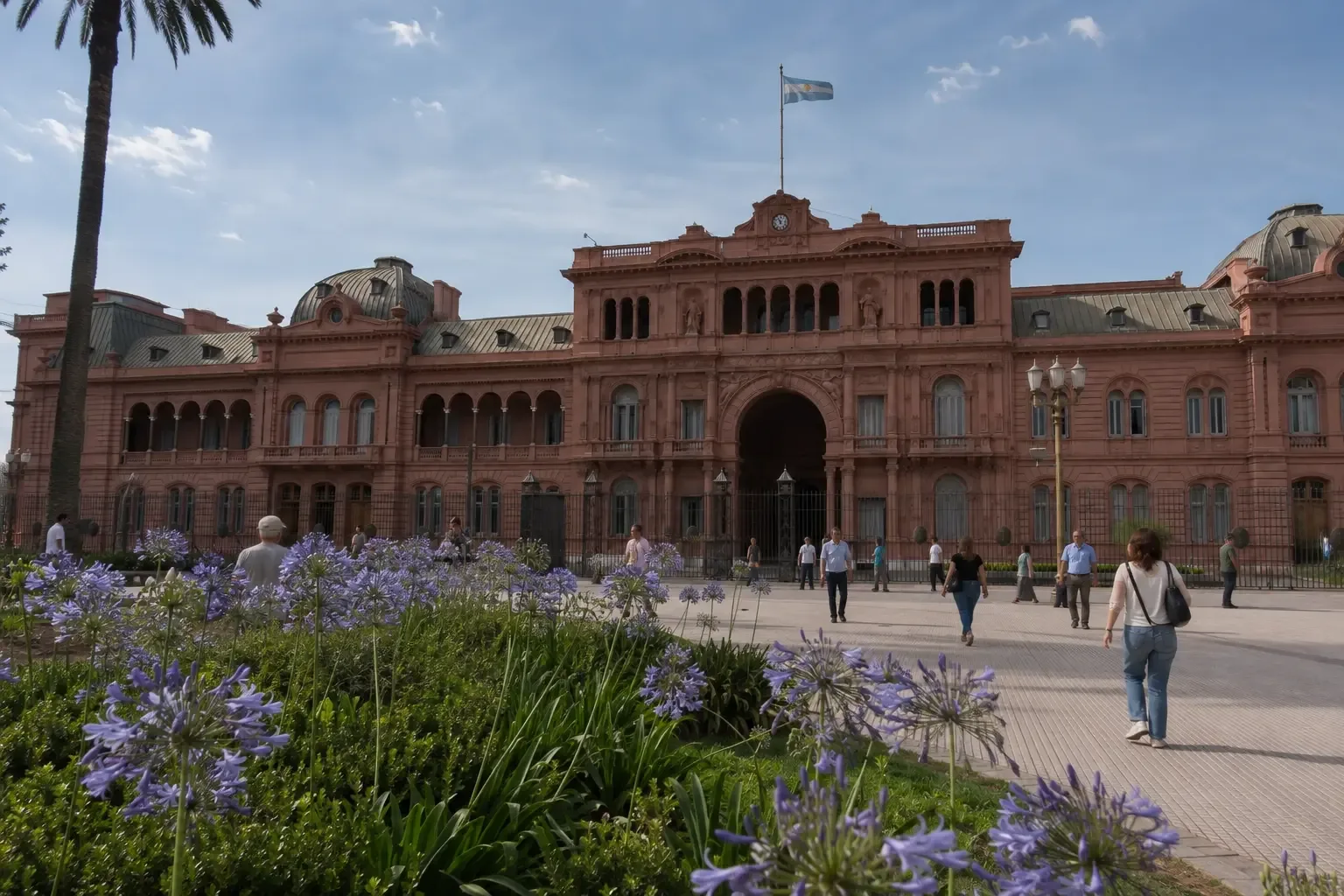
La Boca also combines naturally with nearby neighborhoods. A broader itinerary might include San Telmo and Plaza de Mayo, linking the port and immigrant history of La Boca with the colonial and political center of Buenos Aires.
When Is the Best Time to Visit?
La Boca is generally best visited in the morning or early afternoon, when Caminito’s stalls, museums and visitor services are active.
Weekdays may feel less crowded, while weekends tend to bring more visitors and local activity. Match days create a completely different atmosphere around La Bombonera, but they also produce road closures, crowds and transportation complications.
Museum schedules, stadium visits and temporary exhibitions can change. Check official websites before planning the visit rather than relying on an old itinerary or travel article.
Visiting La Boca With a Local Guide
La Boca is visually engaging even without explanation, but much of its meaning is easy to miss.
A local guide can connect the painted buildings with the history of the conventillos, explain the influence of Genoese immigration, identify Quinquela Martín’s contribution and distinguish the living neighborhood from its tourist representation.
A private La Boca walking tour can also be adapted to different interests. Some travelers may want to concentrate on photography and street art, while others prefer immigration, Argentine soccer, tango or social history.
For older travelers or anyone who prefers a more comfortable pace, a private guide can help plan transportation, walking distances, rest stops and museum visits. This should not be confused with a guarantee of universal accessibility: sidewalks, crowds and individual venues may present practical limitations.
Why La Boca Is Worth Visiting
La Boca is sometimes described simply as the “colorful neighborhood of Buenos Aires.” The description is accurate, but incomplete.
Its colors emerged from a history of immigration, port labor, communal housing and artistic intervention. Its most famous soccer club carries the memory of Genoese settlers in its nickname. Its best-known street was recovered through the work of residents and an artist who believed culture should serve his community.
Caminito is the public face of La Boca, but the neighborhood’s deeper identity is found in the relationship between the port, the conventillos, Quinquela Martín, Boca Juniors and generations of residents who transformed a difficult environment into one of the strongest cultural symbols of Buenos Aires.
Visitors who look beyond the photographs will encounter not just a tourist attraction, but a neighborhood that helps explain how modern Buenos Aires was created.
Explore La Boca With HolaGuides
HolaGuides allows travelers to compare private tours and connect directly with local guides. Explore different approaches to La Boca—from history and art to soccer and photography—and choose a guide whose experience matches the kind of visit you want to create.